
# Complete Guide to Pokémon Card Grading: Protect Your Investment
Grading can add context, protection, and confidence to a Pokémon card collection, but it is not automatically the right choice for every card. A professional grader authenticates a card, evaluates its condition, and seals it in a rigid holder. Before spending money on submission fees, use the PokeScania card scanner to confirm the card, set, language, and likely catalogue match.
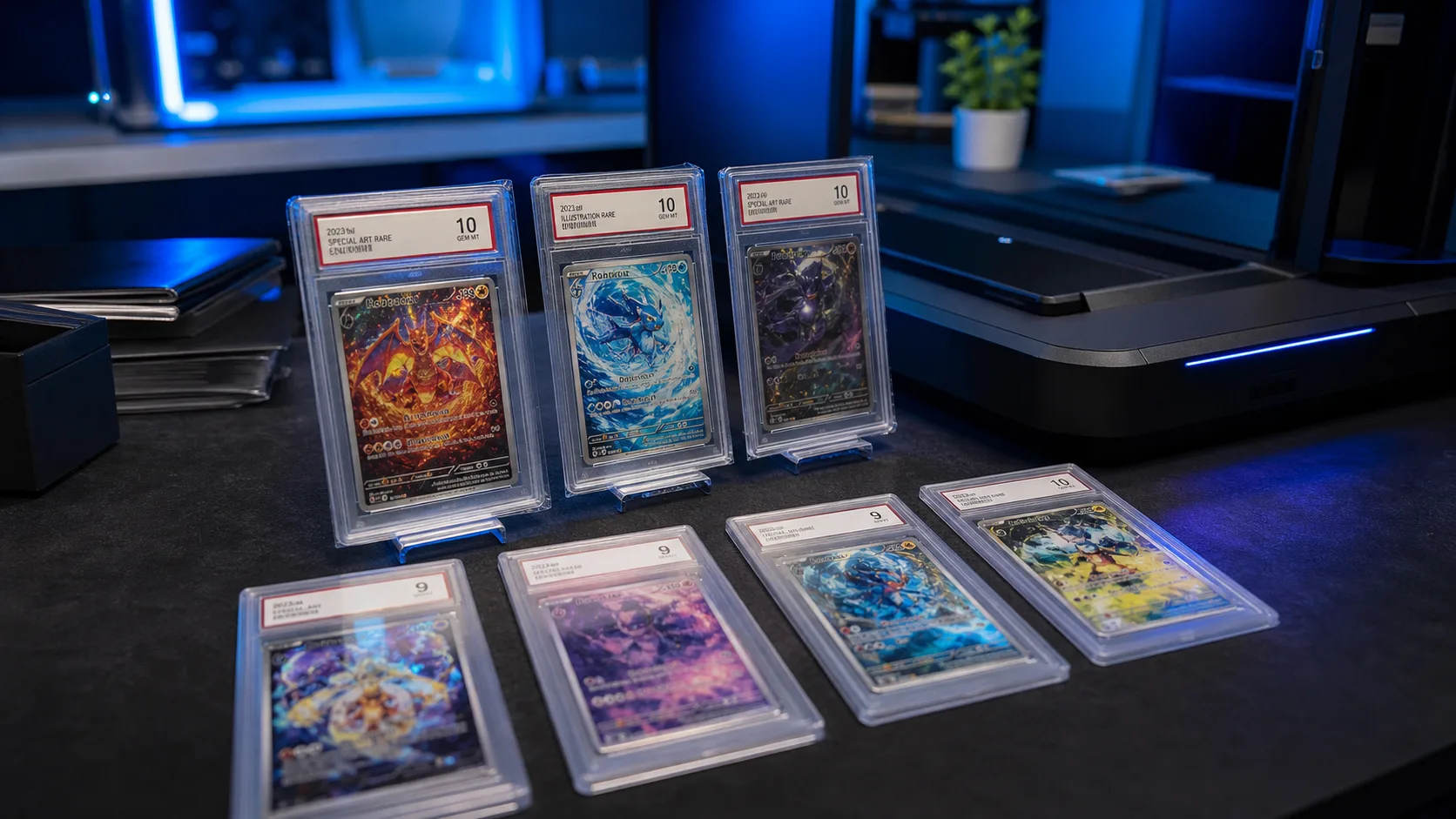
What grading actually does
Grading combines authentication and condition assessment. The company checks whether the card is genuine, then assigns a condition grade according to its standards. The slab protects the card from bending and everyday handling, while the label records the result. A grade can help a buyer compare cards, but it does not guarantee a future price or make a damaged card valuable.
What graders inspect
Centering
The borders on the front and back should be balanced. Small differences are normal, but visibly uneven borders can limit the final grade. Compare the edges in good light and keep the card flat while you inspect it.
Corners and edges
Look for whitening, soft corners, chips, dents, and small nicks. These details are easy to miss when a card is inside a sleeve, so remove it carefully and hold it by the edges.
Surface
Scratches, print lines, dents, fingerprints, and roller marks can affect the grade. Holo cards are especially reflective: tilt the card slowly under a diffuse light instead of using a harsh flash.
How to prepare a card for grading
- Identify the exact printing, language, and set number. Several cards may share the same character or artwork.
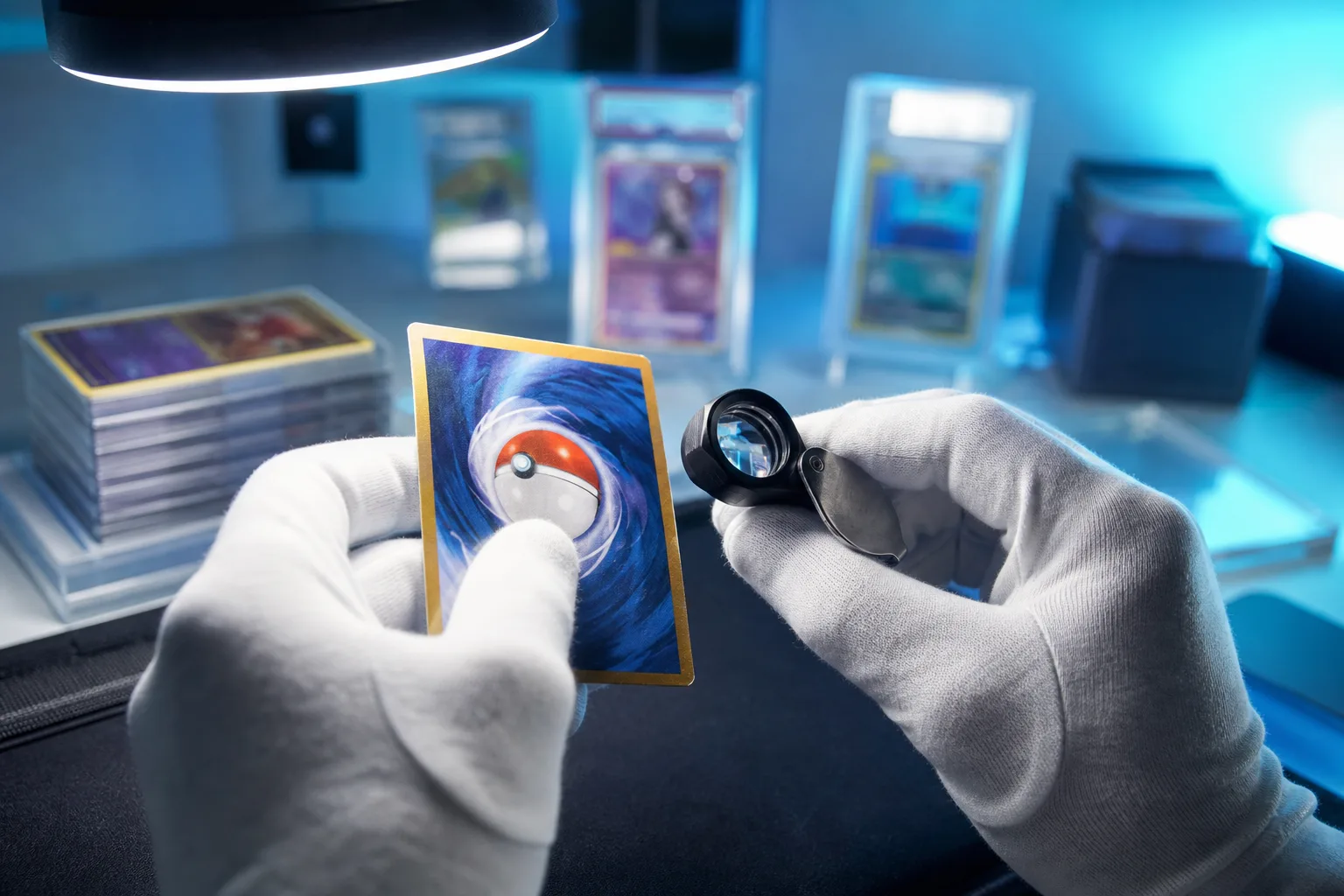
- Wash and dry your hands, then handle the card by its edges. Cotton gloves can reduce fingerprints, but they should not create extra friction.
- Inspect both sides under soft, even light. Do not use cleaning products or rub a surface defect.
- Put the card in a clean inner sleeve and the recommended semi-rigid holder for the company you choose.
- Photograph the card and record its condition before shipping it.
When should you grade a card?
Grading is most sensible when the card is authentic, desirable, and clean enough that the possible benefit justifies the fee, shipping, insurance, and waiting time. Vintage holos, scarce variants, special illustrations, and cards with personal importance are common candidates. A heavily played common card may be better protected in a quality sleeve and binder.
Do not treat a high grade as a promised return on investment. Prices depend on demand, population reports, language, set, condition, and the market at the time you sell. Use the card catalogue and Pokémon set pages to compare the exact printing before making a decision.
Slabs are protection, not a substitute for care
An encapsulated card is safer from bending and handling, but it can still be damaged by heat, moisture, pressure, and poor storage. Keep slabs upright or flat in a stable, dry place away from direct sunlight. Avoid stacking heavy objects on top of them and use dividers so the holders do not scrape against each other.
Final checklist
- Confirm the exact card and variant before submitting.
- Inspect centering, corners, edges, and surface in diffuse light.
- Estimate the complete cost, not only the grading fee.
- Choose protection and storage that match the card's importance.
- Keep expectations realistic: grading provides an assessment, not a guaranteed price.
The best grading decision starts with accurate identification and a calm inspection. Scan the card first, compare the exact printing in the catalogue, then decide whether professional grading adds enough value or protection for your collection.